


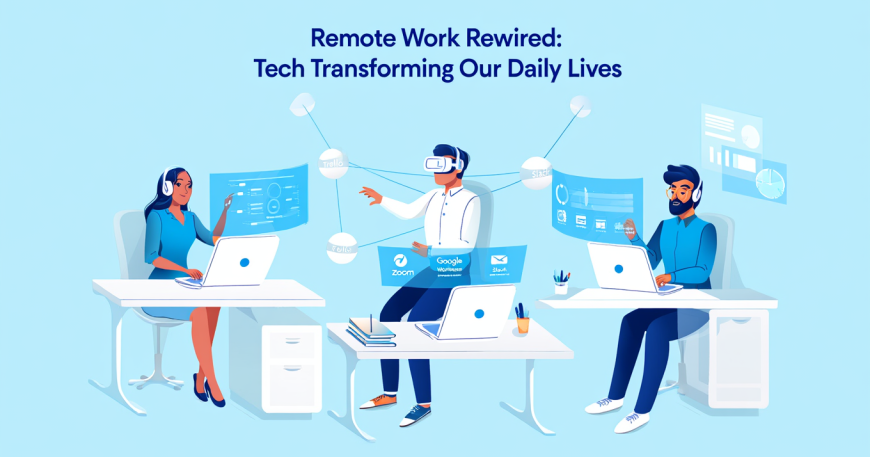
Remote work isn’t just about logging in from home—rather it’s about how technology has transformed daily life, work habits, and human connection. Driven by blazing-fast internet, remote work tech transformation, and global connectivity, working from anywhere is now the norm.
Whether you’re a digital nomad, hybrid employee, or team leader, you’re part of a digital shift. With remote work productivity tools and digital workplace solutions, collaborating across time zones and leading teams remotely is seamless.
Starting from emails and cloud tools, these technologies have evolved significantly with remote work trends, reshaping infrastructure, culture, and how we live and work.
Related Read: Top 5 Tech Trends for Small Businesses in 2025
Digital Workplace: Remote Work Tech Transformation
Teams connect seamlessly from anywhere using remote work tools, smart devices, and cloud collaboration tools. Platforms like Slack, Trello, Google Workspace, Teams, Notion, and Zoom enable natural remote collaboration, while digital communication tools track projects and foster culture beyond casual chats.
GitLab, a leading all-remote company, uses Slack and Zoom along with its own platform to manage a fully distributed team across 60+ countries.
Zapier operates without a headquarters, relying on asynchronous communication with tools like Trello and internal wikis to maintain productivity.
Shopify shifted to a “digital by default” model, using Google Workspace and Asana to promote collaboration and autonomy.
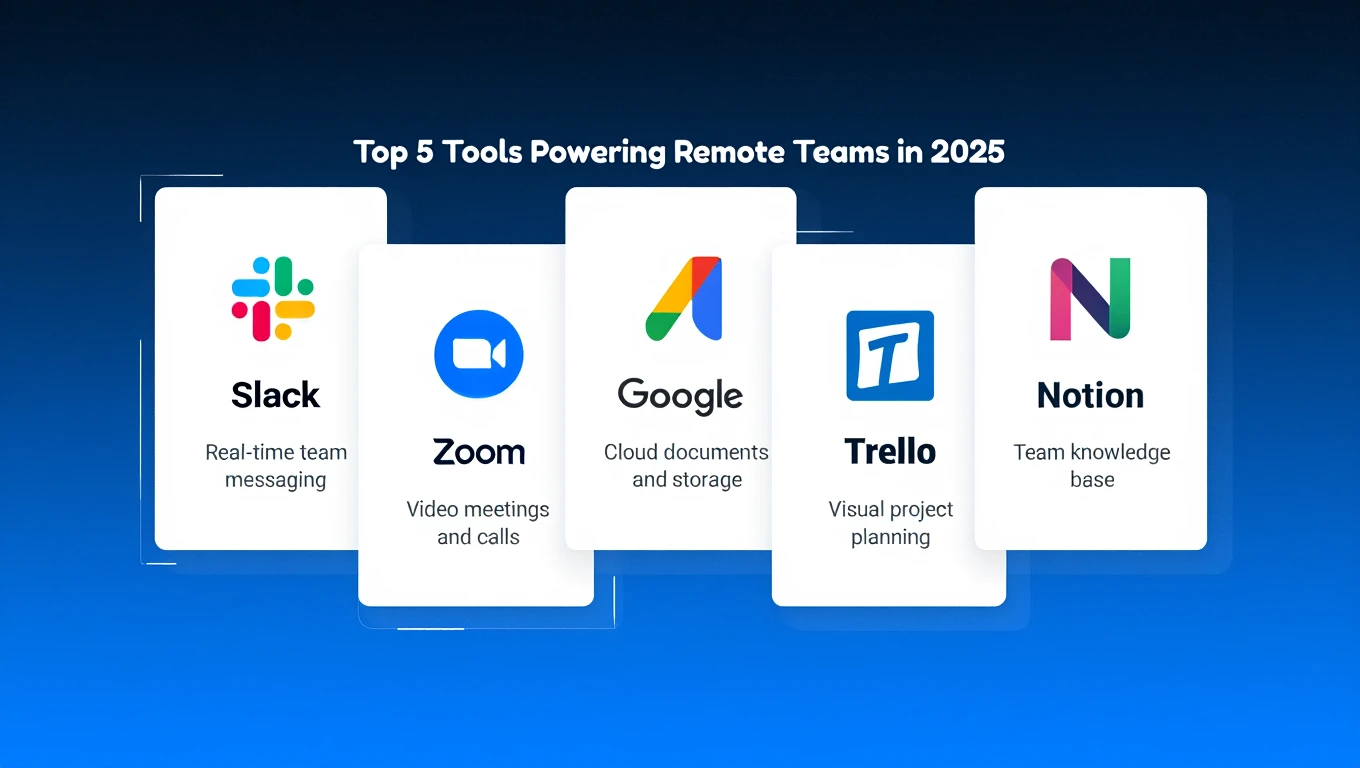
For a comprehensive overview of essential tools powering remote productivity, check out HP’s Definitive Guide on Remote Work Tools. Additionally, Hybrid work technology blurs the lines between home and office, with virtual workspaces enabling real-time brainstorming.
Clouds, apps, and AI streamline workflows—tools like Miro, Google Workspace, Asana, and Trello sync updates and automate tasks. Your smartphone is your most powerful office—extend its battery life with proven tips—while voice-activated assistants manage calls, summarize emails, and suggest next steps. This is today’s invisible digital workplace infrastructure.
Remote Work Unplugged: Setup, Security, and Support
Getting remote work right starts with thoughtful space and tech setup. Use proven fixes for a slow laptop to stay productive. A solid foundation means having the right remote work software and tools for smooth onboarding and an organized virtual workspace.

Essential Cybersecurity Practices for Remote Work
Setup alone isn’t enough—remote cybersecurity is vital for protecting your data. Use strong passwords, enable two-factor authentication, and connect via VPN to protect your data.
For more ways to boost digital safety, see Simple Ways to Secure Your Online Accounts. NordLayer’s guide on Remote Workforce Technologies details secure remote work practices and key tech.
Remote IT Support Tips & Digital Safety Tools
Also, keep IT contacts handy, use remote troubleshooting apps, and ensure team members know where to get help during tech issues. With the right setup, security, and support, remote work is smooth, safe, and stress-free.
For added browser-level protection, try using these free browser add-ons to stay safe on social media, which are great for remote workers handling sensitive data online.
Remote Work Productivity: Tech-Driven Success Tips
Remote work isn’t about working longer hours; it’s about working smarter using remote work productivity tools like project management apps (Asana, Trello), digital planners, and video platforms (Zoom, Teams). These tools help you organize tasks, collaborate seamlessly, and keep track of your progress.
Are remote employees really more productive? Multiple studies now confirm it: remote workers report being 22% more productive on average than their in-office counterparts, thanks to fewer distractions and better work-life balance (Owl Labs 2024 Global Remote Work Report). Moreover, 73% of remote workers say their work-life balance has improved compared to before the pandemic (Buffer State of Remote Work 2025).
Tracking productivity metrics like task completion, time spent, and milestones shows your team’s performance. Use digital communication tools to stay connected and virtual engagement to boost creativity and bonds. These tools and metrics offer data-driven insights to continuously:
- Refine workflows
- Improve morale
- Enhance productivity.
The Expanding Role of Tech Jobs in the Remote Landscape
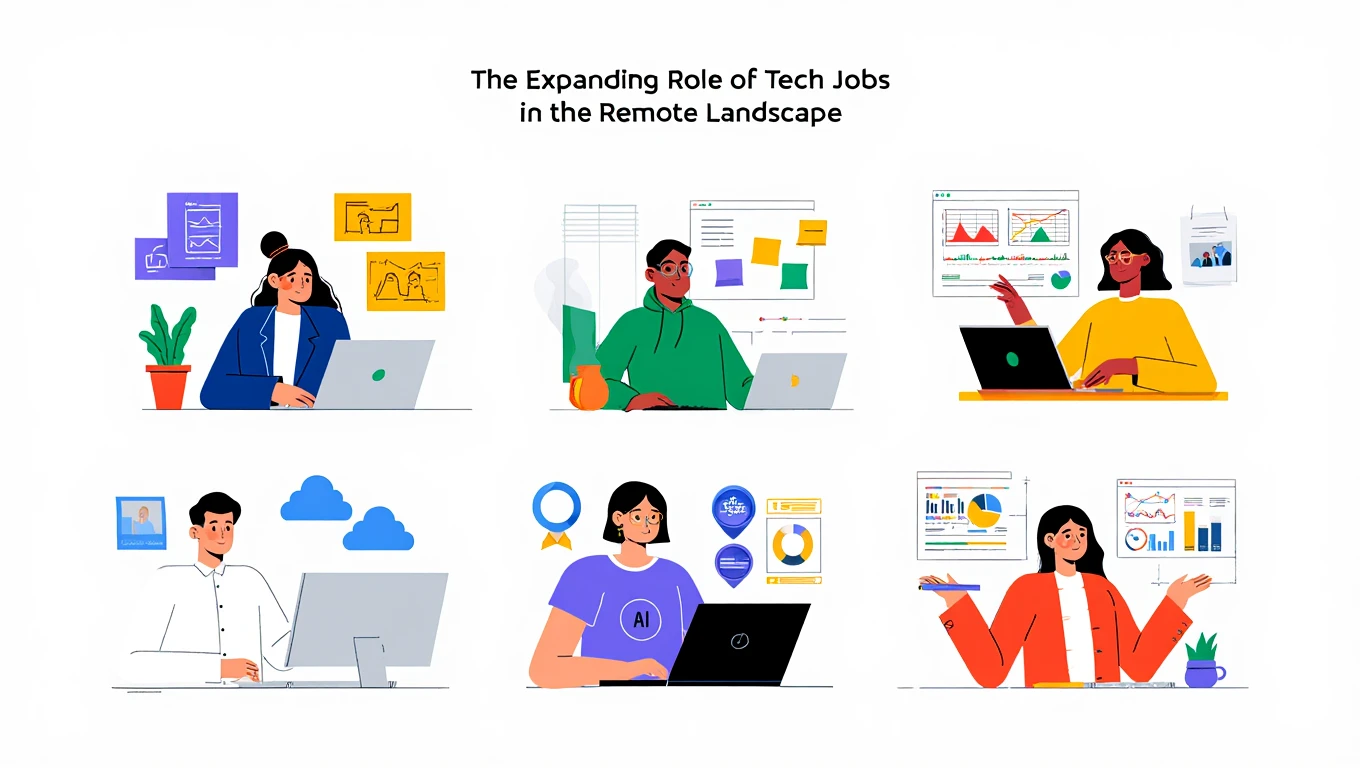
The expanding role of tech jobs in the remote landscape goes well beyond just coding. Today’s remote jobs now include UI/UX design, product management, QA testing, digital marketing analytics, project management, and cloud engineering—and the opportunities keep growing.
Remote work continues to rise: over 90% of companies now offer some form of hybrid or remote work, according to a 2025 FlexJobs survey. The market for remote tech roles has surged—remote job postings grew 40% between 2020 and 2024 (LinkedIn’s 2025 Workforce Report), highlighting unprecedented demand and opportunity.
Soft skills like communication, problem-solving, and interpersonal abilities are vital in remote roles such as technical support and customer success. Remote tech jobs enable global accessibility, allowing talent from all regions to join the digital economy, increasing diversity and inclusion.
Moreover, Continuous learning and upskilling through online courses and certifications keep remote workers current in the fast-changing tech field. Growth in emerging technologies like AI, cloud computing, and cybersecurity is expanding remote opportunities further.
Finally, Remote tech roles also offer better work-life balance and flexibility, boosting job satisfaction and productivity.
What is Next in Digital Remote Work? Trends to Watch
In 2025, remote work advances with smarter AI, greener workplaces, and a changing global work culture. The future of work technology features AI-powered project management, virtual reality and metaverse meetings, plus eco-friendly digital policies.
Hybrid and flexible work models become standard, combining remote and on-site work with personalized schedules. AI-driven productivity tools and intelligent collaboration systems enable asynchronous global teamwork.

To keep pace with remote work tech transformation, AI-powered dashboards and voice assistants will streamline workflows, making them smarter and more human-friendly. Also, Mental health and employee well-being gain priority, supported by digital wellness tools and employer initiatives.
Meanwhile, cybersecurity and data privacy remain crucial as remote work grows. Companies and employees embracing innovation and sustainability will thrive in this evolving landscape. The digital remote work journey is accelerating, bringing new opportunities and challenges in 2025.
Table: Sample Tech Tools Powering Remote Work
| Category | Example Tools | Why They Matter |
|---|---|---|
| Remote Collaboration | Slack, Teams, Zoom | These platforms enable real-time communication, meetings, and team-building, proven to increase remote team productivity by up to 40% compared to traditional setups (Neat 2025). |
| Project Management | Asana, Trello, ClickUp | Help teams organize tasks, deadlines, and workflows efficiently, supporting the 35% to 40% productivity boost reported by remote workers (Neat 2025). |
| Cybersecurity | LastPass, Duo, VPNs | Essential for safeguarding sensitive data and remote connections, addressing growing concerns as remote work expands globally by over 20% since 2020 (LinkedIn 2025). |
| Productivity | RescueTime, Notion | Tools that track time usage and automate workflows drive smarter work habits; studies show remote employees are up to 40% more productive using such apps (Owl Labs 2024). |
| Employee Engagement | Donut, Bonusly | Foster connection and recognition, crucial as 83% of workers prefer hybrid models with strong cultural engagement (Neat 2025). |
Thrive in the Rewired World! Use technology wisely to work smarter, live better, and stay balanced. The wave of remote work powered by tech isn’t ebbing away. Audit your current setup.
Embrace new tools that align with your goals, keep learning, and ride the change—your digital future is brimming with possibilities! Tell us how tech has changed your remote work experience in the comments below!
Remote Work FAQs: Quick Answers
- Is remote work increasing?Yes, more companies and workers are choosing flexible models, making remote the new norm.
- How remote work is changing our lives in the future of work?It's changing the way businesses run, how employees work, and even how entire industries function.
- What is the role of technology in remote work?It connects teams, boosts productivity, ensures security, and supports flexible remote work.
- Why is remote work better for companies?Companies save costs, attract top talent worldwide, and boost team happiness.
- How does remote work help the environment?Fewer commutes mean less pollution, so every remote day puts a little less strain on the planet.
- Which technology is best for remote jobs?Use AWS and Azure for secure cloud operations, apply encryption and threat detection for cybersecurity, and manage remote teams efficiently with Jira, Trello, or Notion.

