

Stop wasting money on a tech regret. Choosing between a tablet or laptop students often regret is one of the trickiest decisions for modern learners. Online classes, multitasking, and heavy assignments make the right device essential.
In this guide, we’ll break down the laptop vs tablet comparison, explore use cases, and help you make a smart student device decision that will save time, cash, and frustration.
Portable Devices for Students: Notes & Online Classes
For students always on the move, portability is crucial. A portable device for students like a tablet offers lightweight mobility, letting you switch between lectures, libraries, and cafes with ease.
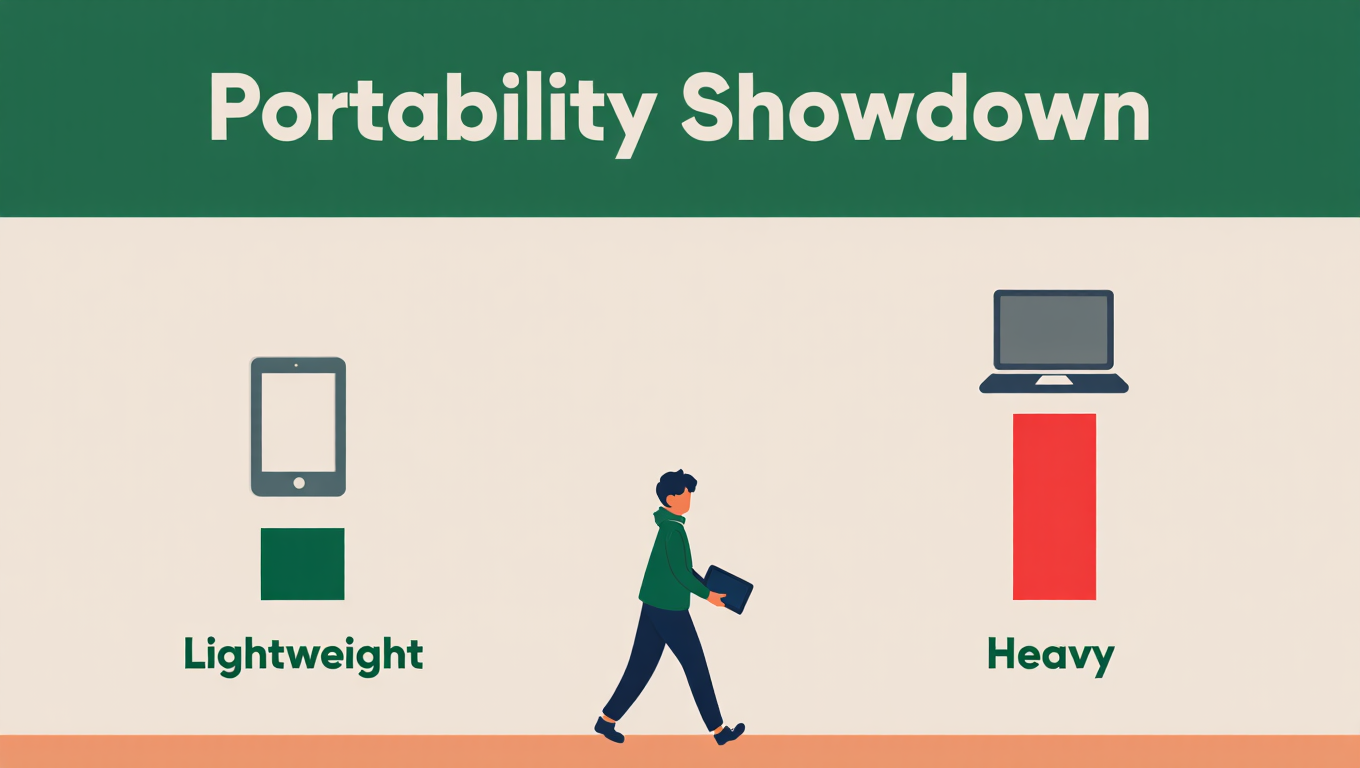
The tablet vs laptop battery life for students is another factor—tablets usually last for standard sessions, while laptops can endure extended work periods.
Portable student tech doesn’t just mean size; it’s about convenience. Tablets shine for online lectures, digital textbooks, and tablet vs laptop for online classes, especially when paired with a stylus for interactive note-taking.
This enhances portable study devices use and improves student productivity tools efficiency. Laptops are slightly heavier but give a reliable portable study device for students juggling multiple apps.
For more tips on managing digital distractions while studying, check out how to reduce screen time without leaving social media.
Tablet Or Laptop: Which Handles Workload Better?
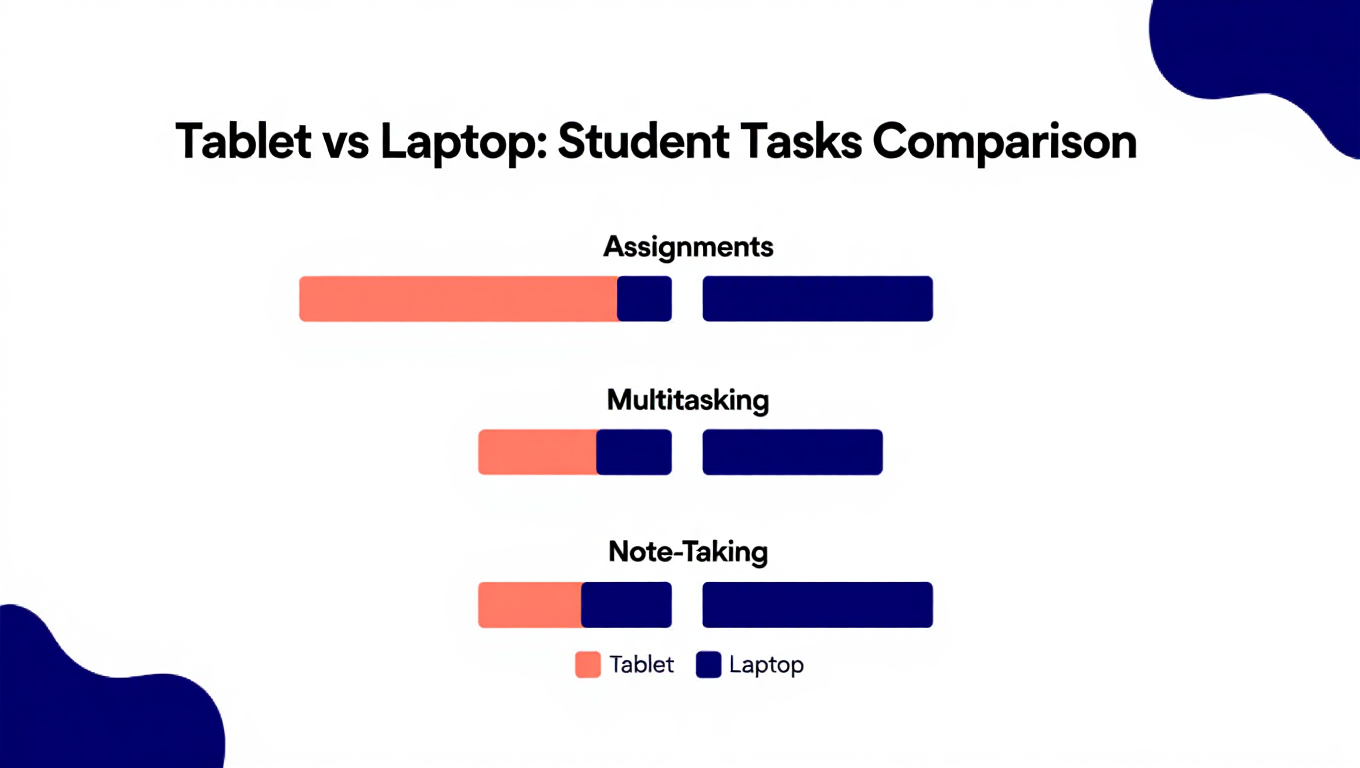
When it comes to assignments and heavy multitasking, laptops are the clear winner. Comparing tablet vs laptop productivity, laptops excel in typing-intensive tasks like essays, reports, and projects. Tablets, however, can handle quick note-taking, light research, and reading PDFs efficiently.
Ask yourself: Are laptops better for assignments than tablets? If you use software like MS Office, coding IDEs, or video editing tools, a laptop with strong multitasking capability and a robust processor is necessary.
On the other hand, tablet or laptop for essays and reports depends on your workflow: tablets are ideal for brainstorming and stylus-based diagrams, laptops for long-form typing.
Tip: Keep your laptop running at peak speed for assignments with these quick fixes—laptop running slow fixes in 10 minutes. Plus, check Microsoft’s student tools to compare Office on tablets vs laptops.
Technical Specs: Durability, Battery, and Storage
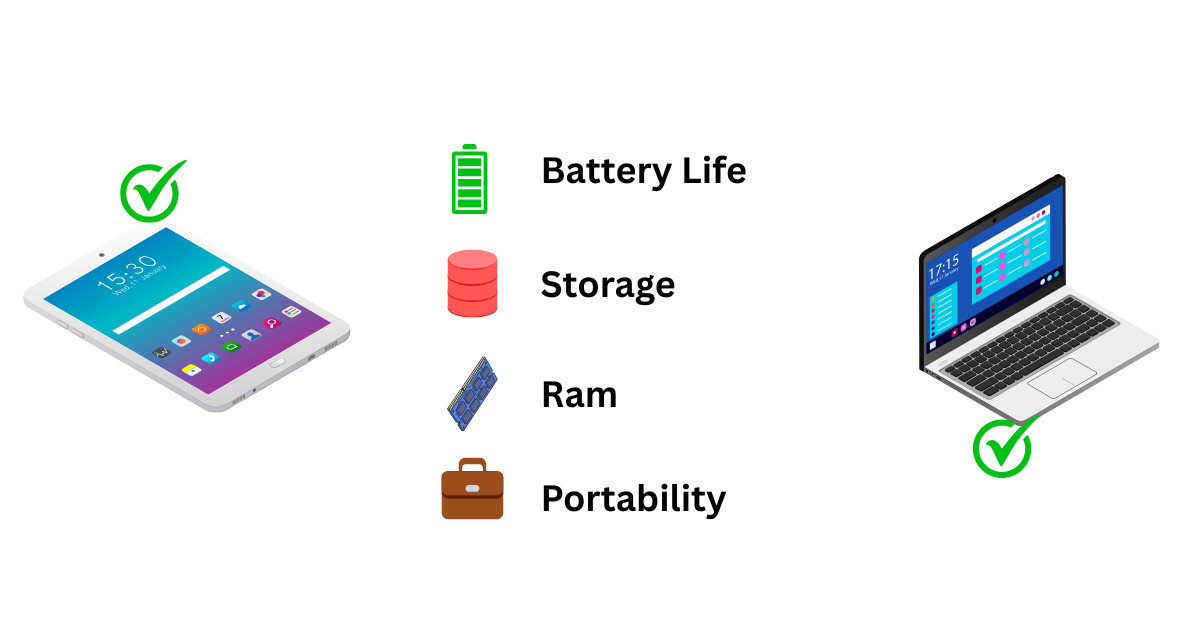
Here’s a quick breakdown to help students compare devices:
| Feature | Tablet Strengths | Laptop Strengths |
|---|---|---|
| Primary use | Touch-friendly apps | Full multitasking |
| Device durability | Lightweight build | Higher device durability |
| Cost and value (ROI) | Low cost entry for students | Long-term investment |
| Mobility | Portable study devices | Slightly heavier |
| Study productivity tools | Quick sketches | Heavy editing power |
| Performance comparison | Apps-focused | Full software suite |
| Battery life | Moderate | Extended sessions |
Storage and study requirements matter. Tablets usually rely on cloud storage, while laptops provide local space for documents, projects, and media. If you’re a heavy user, look into how Everyday AI is changing study habits to see which OS handles new tools better.
Making the Right Investment: Cost and Value
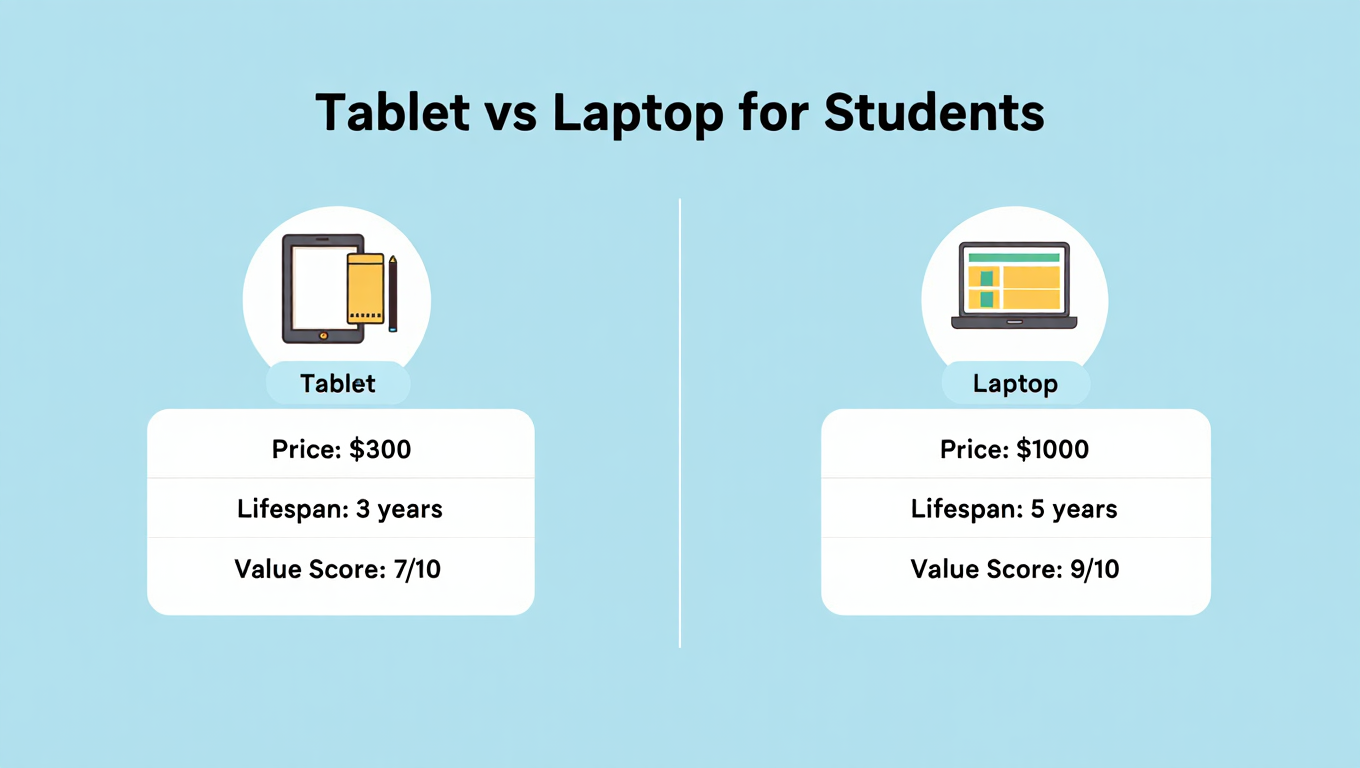
Budget is always a concern. Evaluating cost and value for students ensures a device that offers the highest ROI. Laptops are typically a long-term investment, while tablets are budget-friendly entry points.
Consider your major or workload: laptop vs tablet for college students studying STEM subjects may need more processing power, whereas Arts students might get by with a tablet. Use a student device buying choice framework:
- Assess portability needs.
- Evaluate battery and storage.
- Match device to study tasks.
According to Apple vs Android for daily use, staying within one brand can save you time on data transfers.
FAQs: Common Student Tech Questions
- Is a tablet better than a laptop for students?It depends on the major. For art and nursing (diagram-heavy), tablets are better. For computer science and English, laptops are superior.
- Should students buy a laptop or tablet?If you can only afford one, buy a laptop. It is a more versatile online learning device.
- Which device lasts longer for student needs?Laptops generally have a longer functional lifespan (4-6 years) compared to tablets (3-4 years).
Final Thoughts: Finding Your Perfect Match
Ultimately, choosing the right device boils down to your study style. Tablets are perfect for portability, tablet vs laptop students who value flexibility, and note-taking. Laptops dominate for performance, multitasking, and heavy assignments.
Remember, the best device depends on your daily workflow, budget, and study productivity tools. For tips on keeping your devices and accounts secure while staying productive, check out Simple Ways to Secure Your Online Accounts. Share your experience with tablet or laptop in the comments below.