


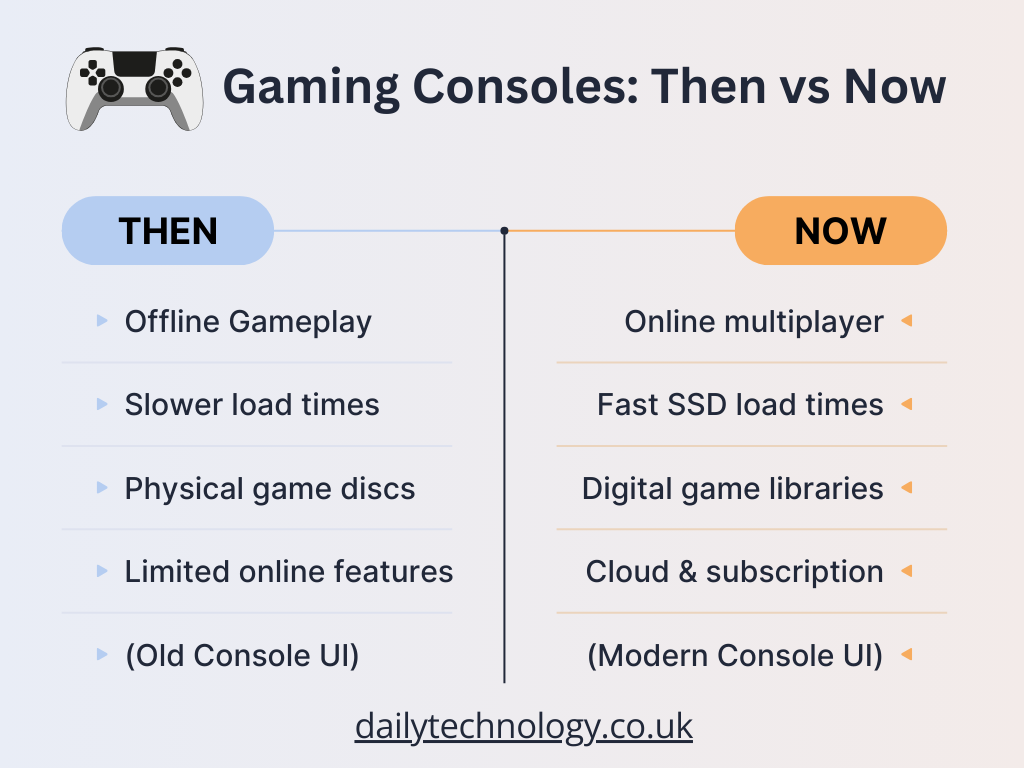
So, what exactly changed in console gaming over the last decade? Console systems has changed fast. Very fast. Over the last ten years, the major changes in gaming consoles have completely reshaped how people play, connect, and experience games.
From raw power to smart ecosystems, the gaming consoles evolution from 2015 to 2025 shows how consoles moved beyond simple hardware. They are now powerful entertainment systems built around player comfort and performance.
Let’s explore how gaming consoles have changed and why these upgrades matter to gamers today.
How Have Gaming Consoles Changed Over Time?
If you compare gaming consoles then vs now, the difference is clear. Older systems focused mainly on playing games offline. Modern consoles focus on speed, visuals, online connectivity, and user experience. This shift has transformed modern consoles into a connected, service-driven ecosystem.
Here are the biggest upgrades that changed console gaming forever.
1. Hardware Power and Performance
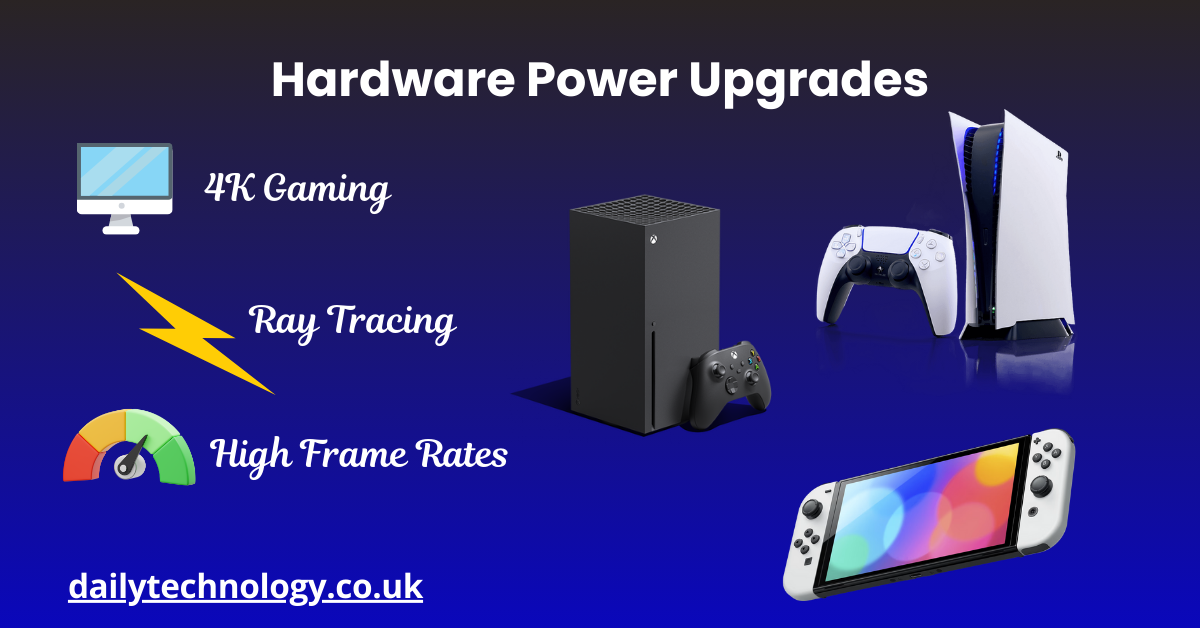
The gaming hardware evolution is impressive. Today’s consoles like the PlayStation 5 and Xbox Series X/S deliver much better console performance. They have faster processors, better GPUs, and support for higher frame rates. Gamers now enjoy smoother gameplay, realistic graphics, and even 4K gaming with ray tracing. The difference in power between the PlayStation 4 and PlayStation 5, or Xbox One and Xbox Series X/S, is huge.
2. Storage Upgrades: From HDD to SSD
One of the most noticeable storage upgrades is the move from HDDs to SSD storage. Gamers no longer have to wait minutes for games to load. This means much faster load times and a smoother gameplay experience.
3. Controller Innovations and Better Interaction
Controller improvements make games feel more real. New controllers offer haptic feedback and adaptive triggers to copy actions like pulling a bowstring or pressing a car brake. They also fit better in your hands, improving overall user experience during long gaming sessions.
4. Online Gaming and Multiplayer Connectivity
Online multiplayer gaming is now a big part of playing on consoles. Players can quickly connect with friends worldwide. Easy connections have helped gaming communities grow and made multiplayer games more fun and competitive.
5. Game Streaming and Cloud Gaming
Cloud gaming and game streaming are on the rise. Services like Xbox Cloud Gaming and PlayStation Now let players enjoy games without needing high-end hardware or full downloads. This makes gaming more accessible to everyone.
6. Digital Game Libraries
Physical discs are no longer the default. Digital game libraries and digital downloads let players store entire collections online. Games are easier to manage, update, and access anytime.
7. Backward Compatibility and Game Preservation
Backward compatibility allows gamers to play older games on new consoles. This helps preserve classic gaming experiences. Gamers can relive their favorite titles while enjoying modern improvements.
8. Subscription Gaming Services
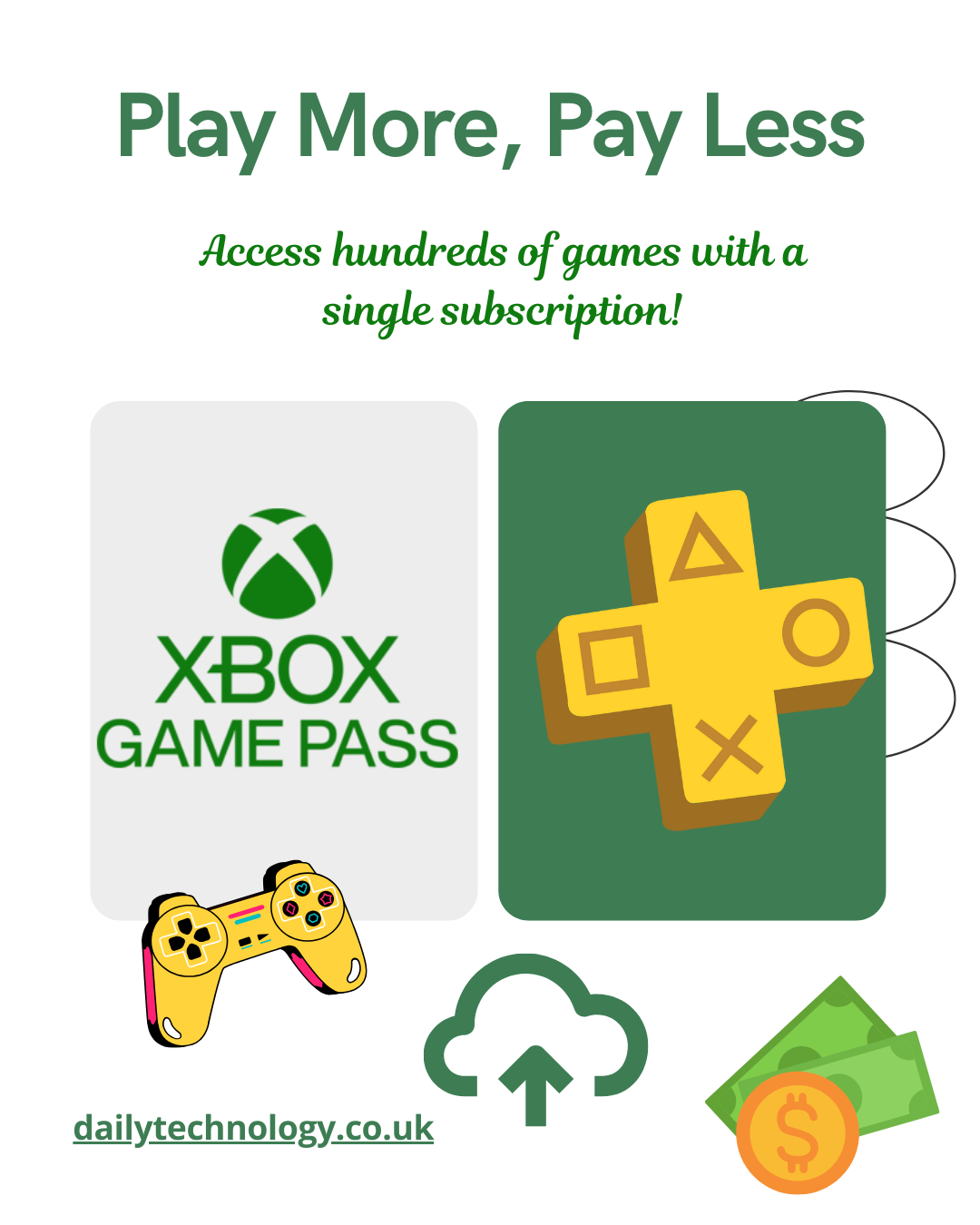
Subscription gaming services have changed how games are purchased. Platforms like Xbox Game Pass and PlayStation Plus offer large libraries for a monthly fee. Gamers can try more games without spending a lot of money.
9. Cross-Platform Gaming
Cross-platform gaming removes barriers between devices. Gamers can now play with friends on different consoles, PCs, or mobile devices. This makes gaming more social and inclusive.
10. Console Exclusives and Gaming Ecosystems
Console exclusives play a big role in shaping gaming culture. At the same time, companies now focus on building complete gaming ecosystems. Modern gaming consoles offer streaming apps, stores, social features, and smart integrations that keep fans engaged.
The gaming consoles evolution last 10 years shows how far technology has come. These major changes in gaming consoles over the past decade have made gaming faster, more social, and more accessible.
As technology advances, the future of gaming consoles looks even more connected, immersive, and user-focused than ever before, with AI-powered features, cloud-first gaming, and subscription-based platforms likely shaping the next generation of console gaming.

